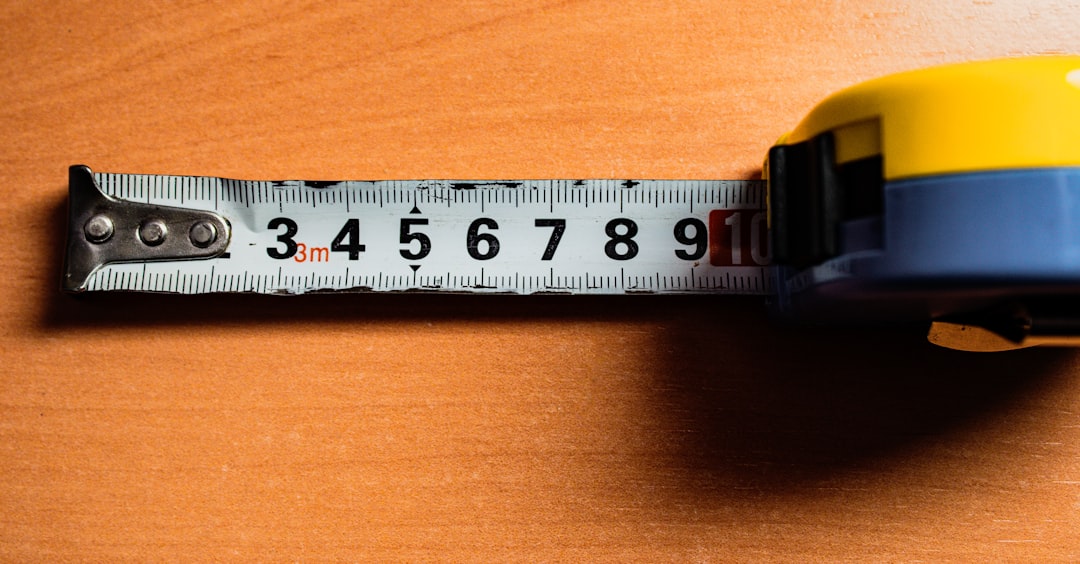
We Are Measuring the World Wrong and the Consequences Are Everywhere
The central unit used to measure value violates the basic rules of measurement. As long as this error remains uncorrected, social and economic disorder is unavoidable.


Political polarization keeps intensifying. Wars reappear as if they were inevitable. The cost of living rises year after year while wages lag behind. Urban and social violence spreads. Governments and global institutions oscillate between emergency measures and long-term plans that never seem to work. New policies are announced, new targets are set, new narratives are created, yet the underlying problems remain unsolved for decades.
At the same time, technology advances at an extraordinary pace. Productivity increases. Automation expands. Knowledge becomes cheaper to distribute. From a purely technical standpoint, these forces should be reducing scarcity and improving living standards across society. Historically, that is what technological progress does.
The coexistence of social deterioration with exponential technological progress is not normal. It signals a coordination failure at a fundamental level.
Understanding why this happens matters. Not as a political debate, not as a moral judgment, but as a technical question. Because if the system that coordinates prices, effort, savings and long-term planning is based on an invalid measurement, disorder is not an accident. It is the expected outcome.
Modern societies measure economic reality using money as a unit of account. Prices, costs, profits, wages and debts are all expressions of this measurement. If the measurement itself is flawed, everything derived from it will also be flawed.
The core issue is not that prices change. It is how they are measured.
The fiat monetary system keeps the nominal unit constant while continuously altering the denominator of the economic scale by expanding the total quantity of units. The symbol stays the same, but the reference base does not. This makes the scale mathematically inconsistent for comparisons across time.
From a logical and mathematical standpoint, scales with a changing denominator are not acceptable in any science, measurement system or rational analytical framework. A scale is only valid if the quantitative reference that defines it remains fixed. When the denominator changes, the scale ceases to be a scale. It becomes a sequence of different systems incorrectly treated as one continuous system.
There is no legitimate case in mathematics or empirical science where consistent inference is allowed from measurements taken on scales whose denominator varies without explicit redefinition of the reference base. Physics does not allow it. Engineering does not allow it. Chemistry does not allow it. Economics quietly ignores this rule.
By expanding the supply of the unit used to measure value, the system breaks intertemporal comparison. Prices from the past cannot be meaningfully compared to prices today. Savings lose their informational role. Long-term planning becomes distorted. Signals that should coordinate production and consumption become noisy and misleading.
This is not a political failure. It is a technical one.
When the main measurement used by a society violates the basic requirements of a valid scale, coordination problems emerge everywhere. Capital allocation degrades. Time preference rises. Short-term survival strategies replace long-term optimization. Institutions respond to the visible symptoms while the measurement error remains untouched.
As long as the world measures value using a scale whose denominator can be altered by privileged actors, disorder is not surprising. It is mathematically unavoidable.
Fixing the problems downstream without correcting the measurement itself is not a solution. It is an attempt to stabilize outcomes produced by an invalid scale.
If the world looks increasingly unstable despite unprecedented technological capacity, the first place to look is not ideology or psychology. It is the unit of measure used to coordinate everything else.
If this line of reasoning makes sense to you, subscribe to follow further analysis on money as a measurement system and why correcting the unit of account matters more than fixing downstream symptoms.
Read next: