
Enjoy Low Time Preference
Why does life feel faster, more anxious and harder to plan for the future? The answer may lie in how we measure value and time itself.

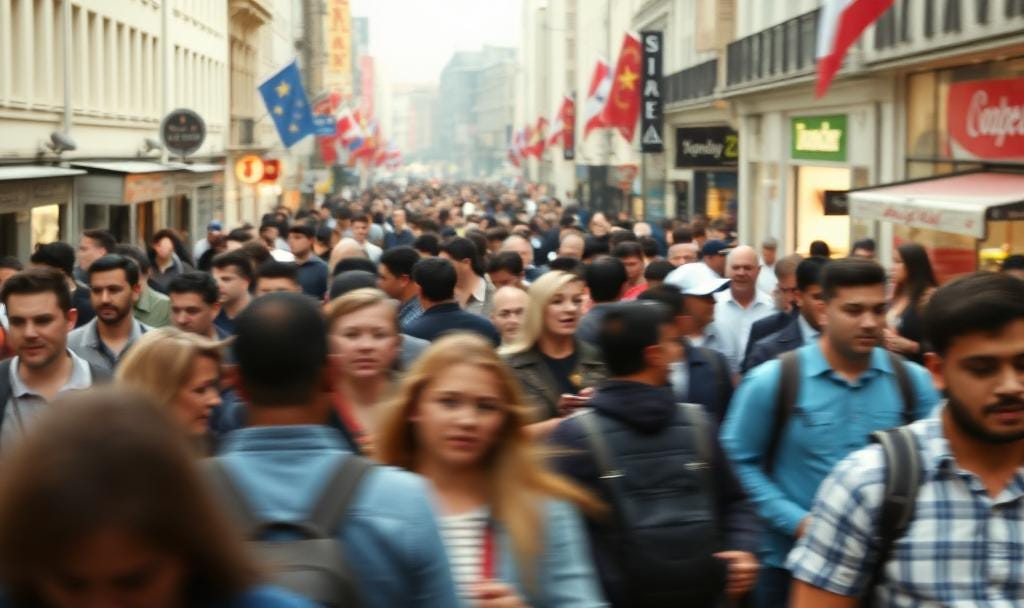
Psychologists, religious thinkers and authors who write about mindset often point to the same pattern. People feel rushed, as if time itself is speeding up. Life is consumed by endless tasks, consumerism grows and the sense of not having enough time feeds constant anxiety. It looks like running on a hamster wheel, always in motion but never arriving. Why is this happening and what is driving this restless cycle?
Modern theories often tell us to “live in the now.” At first glance, this sounds wise: stay present, focus on what you are doing, pay attention to the moment. Doctors and psychologists stress the value of being present. Yet much of the hype around “only live today” comes from something deeper: a loss of hope and vision for the future. In a world where people no longer believe it is possible or even normal to build reserves for tomorrow, the philosophy of living only for today takes root. It shows up in attitudes like vive la vie, spend now, enjoy now, because tomorrow is uncertain. But this short-term psychology distorts society. It shapes not only consumption but also production, pushing industries toward faster, cheaper, lower-quality goods, in contrast with the past when time preference was lower and creations, whether buildings, tools, or music, were made to last.
So what causes this restless cycle? Economically, the core problem is that we lack the right instrument to coordinate society across time. Money is supposed to measure value reliably and to serve not only as a medium of exchange today but also as a store of value for tomorrow. When money holds its worth, it allows people to plan, save and collaborate across generations. But when this quality is broken, when money can be created endlessly out of nothing by elites, it loses its role as a store of value. People sense this and rush to spend before their earnings lose power, often on things they do not truly need, instead of saving for bigger, longer-term goals. The result is a culture of impatience and anxiety. Economists describe this with the term high time preference, a mindset that prioritizes immediate consumption over future stability. Etymologically, it simply means preferring the present over the future and when applied to money, it reflects how distorted incentives reshape behavior across society.
But what happens if society runs on honest money, money that cannot be created at will and will not lose value over time? With Bitcoin, limited forever to 21 million units, that shift becomes possible. Its supply is mathematically fixed and no one can corrupt or inflate it. Under such a foundation, high time preference reverses. People who know their savings will hold value and even grow in purchasing power as technology advances, naturally think long-term. Consumption slows, quality rises and even environmental sustainability follows as wasteful short-term production loses its incentives. Poverty also shrinks, because everyone, including the poorest, benefits when money gains strength instead of bleeding value. The collective anxiety tied to fast spending and low-quality goods begins to fade. It looks like magic, but it is only math: a society built on money that does not depreciate encourages low time preference, giving people space to plan, save and live more consciously across their lives, their communities and even in how they care for the planet.
This is why low time preference is more than an economic concept, it is a way of living. When money holds value, people gain the freedom to slow down, to choose quality over haste and to build for the future without fear of loss. Bitcoin makes this possible by removing the constant erosion that fiat imposes. To enjoy low time preference is to rediscover patience, confidence and collaboration. It is to step off the hamster wheel and start moving with purpose, knowing that time once again works in your favor.
If this spoke to you, subscribe and share it with someone who might also be wondering why life feels so rushed.
Read next:
